Horseshoe with Flowers: A Craft Fair Standout
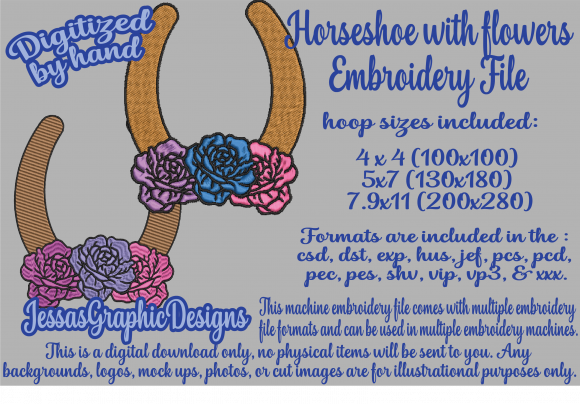
As an embroidery designer preparing for a weekend craft fair, my first task is to evaluate which designs will truly shine on the table. When I look at Horseshoe with Flowers, my immediate impression is a blend of rustic charm and elegant decoration. This isn’t a loud, flashy graphic; it carries a premium, farmhouse feel that whispers quality. That’s a powerful starting point for handmade market products, where customers are drawn to pieces that feel special and thoughtfully crafted.
Where This Design Will Capture Customer Attention
On a crowded booth display, a design needs to communicate its appeal quickly. Horseshoe with Flowers, belonging to the Floral Wreaths category, has a classic, recognizable shape—the horseshoe—framed by decorative florals. This combination tells a story of luck, nature, and home decor in a single glance, which is perfect for engaging buyers who might not spend minutes examining every item. It feels decorative and soft, not minimal or overly bold, making it approachable for a wide range of customers.
In a real-world scenario, my table might feature embroidered tote bags, aprons, tea towels, caps, small pouches, and pillow covers. For Horseshoe with Flowers, I see its strongest application on items that carry that rustic or home-centric vibe. An apron or a tea towel becomes a statement piece, not just a utilitarian item. A simple canvas tote bag transforms into a giftable handmade product. On a pillow cover, it serves as a beautiful focal design that can anchor a section of my booth display. The wreath-like composition makes it ideal for centered placement, which always looks polished and intentional.
Practical Performance on Key Products
Let’s break down how this embroidery design performs on specific craft fair products. The description says it works great for shirts, which hints at versatility, but for a handmade market, I’m thinking of different substrates.
- Tote Bag Design: On a natural canvas or linen bag, this design will look elegant and gorgeous, as the description promises. The stitch density needs to be sufficient to stand out against the potentially coarse fabric texture.
- Apron Embroidery: Positioned centrally on a chef’s apron or a half-apron, it becomes a charming, premium detail that elevates the entire product.
- Tea Towel Embroidery: Kitchen towels can be tricky due to their texture, but a well-executed design here feels incredibly giftable. It should maintain clarity on the looped fabric.
- Embroidered Patch: This could be a fantastic standalone product. As a patch, it’s versatile—customers can apply it to jackets, bags, or hats. The wreath shape lends itself perfectly to a patch format.
- Pillow Cover: This is a high-value application. A large, well-hooped rendition on a pillow cover can command a higher price point and attract serious home decor buyers.
- Caps & Pouches: On curved cap surfaces or smaller fabric pouches, I’d be mindful of size. The design might need to be scaled appropriately to ensure the floral details don’t get lost.
Selling Points: Visual Appeal and Production Practicality
For an Etsy seller or boutique maker, the online presentation is just as crucial as the booth display. Horseshoe with Flowers photographs well because it has a balanced composition—a central object surrounded by florals. This creates a natural focal point for listing photos and printable mockups. It enhances perceived product value by looking intricately handmade, yet the description calling it “fun and easy to stitch” suggests it might be efficient for batch production, which is key for stocking a fair.
Is it repeatable? For producing multiple tote bags or towels for my booth, a design that is “easy to stitch” is a major advantage. It likely means manageable stitch counts and straightforward color changes, allowing me to run several items without constant machine babysitting. This practicality directly affects my booth display strength; I can have a cohesive collection of items featuring the same beautiful design, reinforcing my brand consistency.
Careful Use Notes for a Professional Finish
Even with a high-quality embroidery file, real-world production requires careful testing. Here are my designer notes for applying Horseshoe with Flowers to commercial embroidery products:
- Always test the design on scrap fabric identical to your final product fabric—be it canvas for bags, terry for towels, or twill for caps.
- Check thread contrast against your fabric colors. On dark fabric, you may need to adjust colors or use a lighter backing to ensure brilliance.
- Review spacing and small details. If the florals have tiny elements, they might blur on textured towels or at very small sizes on a pouch.
- Confirm hoop size compatibility with your intended products. The design likely has a recommended size, but you must match it to your item’s constraints.
- Inspect stitch density on your test piece. Dense areas on thick fabric might require the correct stabilizer to prevent puckering, which hurts handmade quality.
- Create at least one real mockup before batch production. A physical sample tells you more about customer attention than any digital preview.
- Finally, as a digital embroidery file, ensure you understand its licensing for small shop product sales. The description doesn’t specify, so I always advise readers to confirm commercial licensing before selling finished products.
Final Judgment for the Craft Fair Booth
Horseshoe with Flowers is a design with strong craft fair potential. Its mood—rustic elegance—aligns perfectly with what sells in handmade markets: items that feel personal, well-crafted, and suitable for gifting or home adornment. It works as both a large focal point on pillow covers and a smaller accent on caps or pouches, giving me flexibility in my product lineup.
Its success hinges on execution. By choosing the right products—like premium tea towels or statement tote bags—and following meticulous production steps, this design can become a booth standout that drives buyer engagement. It won’t be the loudest design on the table, but its quiet, decorative elegance will attract customers looking for that special, gorgeous handmade touch. For the creative entrepreneur, it represents a versatile design asset capable of elevating a range of finished products, from the simplest patch to the most decorative home good.