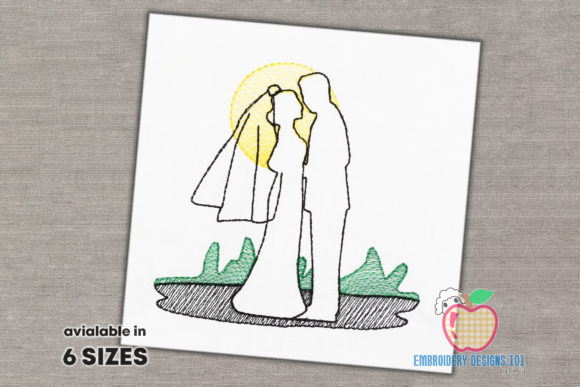
Bride and Groom in Love: A Quick Stitch Review
When you’re browsing for a new embroidery file, especially in the Wedding Family category, you’re looking for more than just a graphic. You’re looking for a design asset that translates beautifully to fabric, holds its clarity, and resonates with your clients or your own creative vision. So, let’s get practical and talk about the Bride and Groom in Love Quick Stitch design from the perspective of someone who’s going to actually stitch it onto something real.
The Immediate Mood & Visual Personality
The first impression here is charming and lighthearted. It’s a clean, modern take on the classic wedding couple motif—less ornate, more about a joyful shape. This isn’t a hyper-detailed portrait; it’s a silhouette-driven design that relies on clear forms and a sense of movement. The layout feels balanced and open, which is a huge plus. Too much density in a wedding-themed design can look heavy on, say, a delicate linen napkin or a baby’s blanket. This one has a personality that’s sweet without being saccharine, making it versatile for a range of projects beyond just traditional wedding gifts.
Where This Design Naturally Belongs
In my mind, I immediately picture this on a custom apparel item like a bride’s rehearsal dinner sweatshirt or a groom’s casual cap. It’s the kind of embroidery that personalizes without overpowering the garment. But its true strength is in handmade products for small shops. Imagine it stitched onto a high-quality canvas tote bag—it becomes a chic, usable gift for a wedding party member. On a crisp, white pillow cover for a bridal suite, it adds a subtle, custom touch. For Etsy sellers and boutique owners, this design could anchor a whole line of wedding-themed merchandise: kitchen towels, aprons for the couple’s new home, or even a simple framed patch as nursery decor for a baby’s room. The “Quick Stitch” promise suggests a reasonable stitch count, which means faster production time for your craft business, a key consideration when planning inventory for a craft fair or updating your digital product previews.
Performance on Real Products: A Real-Life Scenario
Let’s walk through a typical project. I’m preparing a custom embroidered tote bag as a wedding gift for a client. I’ve selected a natural cotton canvas. My concerns are always about stitch clarity on a textured fabric and whether the design’s proportions will look balanced on the bag’s panel. The Bride and Groom in Love Quick Stitch, with its likely use of solid fill stitches and clean outlines, should handle texture well. The open layout means less dense stitch areas, reducing puckering on the bag’s sturdy fabric. The visual appeal here is about crispness. When a customer sees that finished tote, the clarity of the couple’s shape directly impacts the perceived value and professionalism of your work. It looks intentional and well-executed, which builds customer trust for your brand.
Similarly, on a baby item like a soft cotton romper, a dense design can be stiff and uncomfortable. This one’s lighter personality would stitch out gently, maintaining the fabric’s flexibility. For holiday gifts like Christmas stockings or anniversary pillows, it provides recognition and giftability without feeling like a generic, mass-produced image.
Where to Exercise Some Caution
While the description says it will look great on any fabric, we as experienced designers know that’s a guideline, not a rule. Always consider your specific application. On very thin or stretchy fabrics like certain t-shirt knits, even a “quick” design needs proper stabilizer to prevent distortion. Stitching onto dark fabric will require careful thread color contrast planning—perhaps opting for brighter whites or metallics to pop. The design’s success on curved surfaces like caps depends on how those smaller, possibly intricate details (like the suggestion of hands or dress flow) handle the curve. I’d be cautious about using it in a very small hoop size; shrinking it too much might compromise the clean lines that give it its charm. And for products destined for frequent washing, like kitchen towels or apparel, reviewing the stitch density in those fill areas is key to longevity.
Impact on Your Business & Creative Work
For creative entrepreneurs, a design like this is a tool. Its visual personality supports brand consistency if wedding or family-themed items are your niche. It helps in buyer engagement—a clean, pretty embroidery on a printable mockup for your Etsy listing immediately communicates quality. For digital product sellers offering the file itself, its “fun and easy” nature is a selling point for other makers. For commercial embroidery projects, like producing a batch of patches for a wedding planner, its straightforward look means reliable, repeatable results across many units.
Practical Designer Notes Before You Hoop
My routine with any new design, no matter how promising, involves a few checks. For the Bride and Groom in Love Quick Stitch, I’d strongly advise:
- Stitch a test on scrap fabric first, ideally a similar texture to your final project.
- Review the stitch file to understand the stitch types—are the outlines satin stitch or running stitch? This affects the final texture.
- Check thread color contrast. Run a mental test: how will it look on both a light and dark background? Sometimes a quick black-and-white mockup can reveal if the shapes hold up without color.
- Confirm the exact hoop size required and that it aligns with your intended product’s available space.
- Inspect the small details in the preview. Are there any tiny elements that might become lost or tricky?
- And crucially, confirm the licensing terms. Is this embroidery file cleared for commercial use, allowing you to sell the finished tote bags and pillow covers? Never assume.
These steps turn a good digital embroidery file into a successful, real-world finished product.
The Final Take for Makers
The Bride and Groom in Love Quick Stitch design presents a solid, versatile option for anyone working in the wedding and family space. Its strength is in its adaptable, cheerful mood and its likely efficiency in the hoop. It won’t suit every project—it’s not a hyper-formal, intricate piece—but for the vast middle ground of personalized gifts, custom apparel, and small shop merchandise, it’s a contender. It promises to translate into embroidery that looks handmade in the best sense: deliberate, charming, and full of the kind of simple joy that makes a client smile. Just pair it with the right fabric, the proper stabilizer, and your own good judgment, and it should stitch out as a reliable and appealing part of your creative work.